
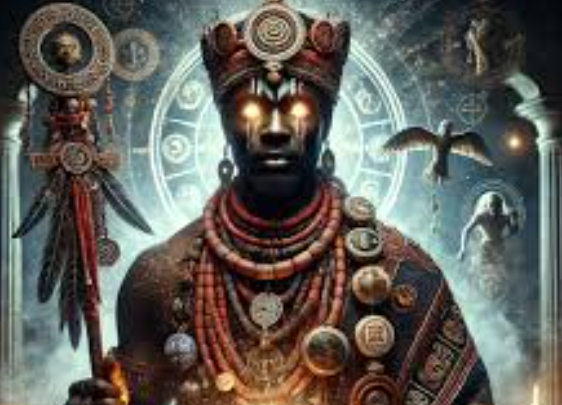
Agwu Nsi is a powerful spirit in Odinani, the Igbo religion. It represents divination, chaos, and inspiration. Agwu guides Dibia, the healers and diviners, through both challenges and wisdom.
The name Agwu means confusion or talent. Nsi means medicine or poison. They both push chosen people toward their purpose. Agwu Nsi signs include mental fog, sickness, business struggles, prophetic dreams, and herbal insights.
Afflictions help clear attachments. Gifts appear as visions and creativity. Agwu gives Dibia spiritual sight, herbal knowledge, and authority through the Iru Agwu initiation.
The Ofo staff is used to speaking the truth. Agwu Nsi symbols are the Ofo, Ikenge, Nzu chalk, and divination tools. Offerings include Oji colanut, palm wine, and poultry. Unlike Chi, Agwu exists outside the person. It is different from the achievement altar, Ikenga.
READ ALSO: Aganju: The Orisha Of Volcanoes, And Wilderness
What Is The Meaning And Etymology Of Agwu Nsi?
Agwu Nsi is one of the most complex spirits in Odinani, the traditional Igbo religion. It is the Spirit of divination, chaos, and creative inspiration. It guides the Dibia, who are traditional healers and diviners.
Agwu has a dual nature. It can give great skill, wisdom, wealth, and prophetic vision. But it can also bring confusion, strange illness, misfortune, or spiritual trouble to the person it chooses.
When someone is “caught” by Agwu, the goal is not to fight it. Instead, the person must learn to understand it and turn its wild energy into a positive spiritual calling.
Meaning Of The Name Agwu Nsi
The name Agwu Nsi is derived from two Igbo words:
- Agwu: Agwu means confusion, wildness, or special talent. It represents the power that pushes a person toward their spiritual purpose, through early confusion.
- Nsi: Nsi means medicine, poison, or charm. It shows that Agwu’s power is connected to healing, spiritual knowledge, and the use of powerful medications.
What Are The Signs Of The Agwu Calling Or Affliction?
The Agwu Calling is rarely calm or pleasant at the start. It usually begins with chaos and spiritual trouble. This disruption pushes a person toward their destiny as a Dibia (traditional healer).
To understand the signs of this calling, one must separate the confusing symptoms from the spiritual abilities that are slowly appearing.
Afflictive Signs
These are the early, troubling signs. Many people misread them as madness, bad luck, or personal failure. The stronger a person resists the call, the harsher these signs may become.
Sudden Confusion And Disorientation:
The person may feel deep fear, mental fog, or inner disorder. They may feel spiritually “lost.” Daily tasks become hard, and focus becomes almost impossible.
Persistent Spiritual Sickness:
The person may suffer from recurring aches, fevers, or other unexplained illnesses that do not respond to normal treatment.
This sickness is seen as a tool of Agwu Nsi, meant to weaken the body so the spirit world can get the person’s attention.
Social And Material Disruption:
Businesses may fail without warning. Money may disappear quickly. Important relationships may fall apart. Within the tradition, these losses are seen as Agwu clearing away old attachments to prepare the person for the exclusive life of a diviner.
Unusual Behavior:
The affected person may act in ways that seem odd or alarming. They may withdraw from others, perform ritual-like actions without knowing why (such as gathering certain herbs), or have sudden outbursts that seem senseless to those outside the Odinani system.
Inspirational Signs
Even while the Agwu Affliction causes distress, spiritual gifts begin to surface. These signs show the positive side of the spirit’s influence.
Prophetic Dreams And Visions:
The individual may have intense, vivid dreams or waking visions. These are often symbolic rather than direct. They may reveal hidden problems, warn of future events, or bring messages from ancestors. Images of water beings or masked spirits are common.
Creative Genius And Inspiration:
A sudden rise in creativity or insight may appear. The person may discover new talents in crafts, storytelling, or music. Most importantly, they may show a natural understanding of herbs and the unseen forces of the spiritual world.
Pull Toward The Sacred:
The person may feel a strong urge to visit sacred places, perform rituals, or study divination tools. This attraction signals that they are ready for training and the path toward becoming a Dibia.
READ ALSO: The Ogoni People Of Nigeria: A Complete Guide To Their History, Culture, Traditions And Facts
What Is The Relationship Between Agwu Nsi And The Dibia?
The relationship between Agwu Nsi and the Dibia (Traditional Healer) is more than a simple spiritual influence.
It is a deep, two-way relationship that forms the Dibia’s work in Odinani. Agwu Nsi is the divine force that calls a person into the healing path through the Agwu Affliction.
This same power gives the Dibia the special abilities needed for the role. The Dibia becomes the channel through which the spirit’s sharp and chaotic energy is directed to help the community.
Without the spirit’s clear and ritually confirmed guidance, a Dibia can not act as a true diviner or healer. Their authority and skill come directly from this spiritual support.
The Key Roles Of Agwu Nsi In The Work Of The Dibia
Opener Of Spiritual Sight (Igbà Afa):
Agwu gives the Dibia “second sight,” a form of spiritual vision. This gift is essential for divination. It allows the Dibia to look beyond the physical world and find the real cause of misfortune, whether it is a broken moral law, an issue with the ancestors, or a problem with the client’s Chi.
This insight guides all healing work.
Source Of Special Knowledge:
Agwu is believed to reveal deep knowledge of herbs and sacred rituals. The Dibia does not gain this wisdom through training alone. The spirit teaches them, giving them powerful remedies for both spiritual and physical problems.
Giver Of Professional Authority:
The Iru Agwu initiation is the Dibia’s full acceptance of their calling. This ceremony makes the relationship public.
It also connects the Dibia to important spiritual tools, such as the Ofo staff, which represents the spirit’s power and the healer’s right to practice.
Controller of Chaos:
Agwu Nsi is the only force that can guide the chaos it creates. Through this guidance, the Dibia becomes the community’s expert in handling unpredictable spiritual forces, such as spirit sickness, witchcraft claims, and other wild disturbances from the unseen world.
What Symbols And Offerings Are Associated With Agwu?
The spiritual power of Agwu Nsi becomes real through specific symbols and ritual acts.
These practices turn the spirit from an abstract idea into a form that can be worked with, which allows the Dibia to have a close, cooperative relationship with Agwu. The items used are either sacred divination tools or offerings to keep spiritual balance.
Key Symbols And Ritual Objects (Tools Of The Dibia)
Ofo:
The Ofo is a sacred staff and a symbol of truth and ancestral power. When dedicated to Agwu Nsi, it becomes the Dibia’s most important tool.
It gives the Dibia the power to make spiritual decisions and confirm their prophetic knowledge. The Ofo turns the Dibia’s words into real spiritual action.
Ikenge (Ikenga):
This symbolizes a person’s drive and Chi (personal spirit). It is found in Agwu shrines.
Nzu (White Chalk):
Nzu is sacred spaces and boundaries. It stands for purity, clarity, and spiritual acceptance. Dibia uses it on the eyes or forehead to improve spiritual sight and protection during rituals.
Divination Tools (Afa):
Tools like cowrie shells, seeds, or bones are used in Igbà Afa (divination). These objects help Agwu Nsi communicate messages to the Dibia.
Offerings Are Associated With Agwu
Offerings to Agwu Nsi are spiritual acts needed to keep the spirit satisfied, especially during Iru Agwu rites.
Colanut (Oji):
The Colanut is the main item for greeting and communication in Odinani. Offering it opens dialogue with the spirit and presents the devotee’s requests or thanks.
Palm Wine And Poultry:
These are common sacrifices. Blood from a rooster or hen connects the devotee to the spirit and removes spiritual sickness and chaos associated with the calling.
Uli (Dye) And Clay Pots:
Uli dye is used for body art during initiation rites. It shows sacred markings and spiritual transformation. Clay pots hold sacred water and serve as vessels to manage the spirit’s energy.
Using these objects helps the Dibia organize and control the powerful and sometimes chaotic energy of Agwu Nsi.
READ ALSO: The Hausa People Of Nigeria: A Complete Guide To Their History, Culture, Traditions And Facts
FAQs About Agwu Nsi: Igbo Deity Of Divination, Affliction, And The Dibia
How To Appease Agwu spirit?
Perform Iru Agwu or Ikpu Agwu rituals. Consult a dibia afa. Offer a young chicken and ogilisi leaves at the Agwu shrine. Sprinkle the blood. Roast the chicken for the victim alone. This frees one from affliction and accepts the calling.
What Is The Difference Between Chi And Agwu?
Chi is your personal guardian spirit. It forms your destiny. Agwu is an external spirit of divination and healing. It can possess a dibia and cause mischief if ignored. Chi is innate. Agwu calls through signs and symptoms.
What Are The Powers Of Agwu?
Agwu gives divination, healing, wisdom, and inspiration. It can cause illness if not appeased. Agwu empowers dibia with insight, prophecy, and herbal knowledge in Odinani practices.
What Is The Difference Between Agwu And Ikenga?
Agwu is a spirit of medicine and divination that possesses healers. Ikenga symbolizes personal strength, achievement, and success. Agwu is a possessive deity. Ikenga is an altar for accomplishment.
How Many Types Of Agwu Do We Have?
There are many types of Agwu. Examples include Ụmụ Agbara Agwu (warriors) and Ụmụ Abanị Agwu (nocturnal). Others focus on healing or divination. Some have animal totems, like the tortoise.