
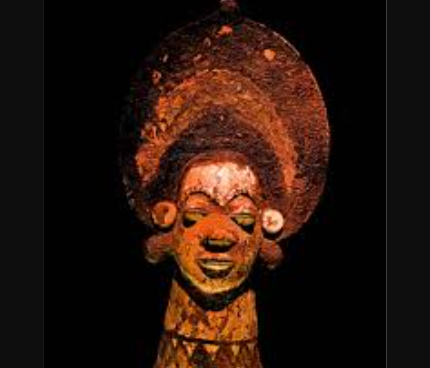
Ala, also called Ani, is the Igbo Earth Goddess in Odinani. This deity is the land itself. Life begins on that ground. Ala brings fertility, healthy crops, and strong family lines. The Earth Mother guards moral order and watches every action.
Omenala, the Igbo code of custom and law, depends on Ala’s approval. Aru Ala, an abomination against the Earth, harms the land and can trigger famine or sickness.
Major taboos, called Nsọ Ala, include spilling blood, incest, harming the sacred Python, and stealing yams before the New Yam Festival.
Purification rites clean these offenses. Festivals honor this Earth Goddess, especially Iwa Ji, which gives thanks for new yams.
READ ALSO: Àjẹ́: Yoruba Orisha Of Wealth And Commerce
Who Is Ala, The Chief Igbo Deity?
Ala, also called Ani, is the most powerful deity, or Alusi, in Odinani, the traditional spiritual system of the Igbo people of Southeastern Nigeria. This Earth Goddess is not only a spirit of the land. Ala is the ground itself, the solid base where all life begins.
Ala has two major roles. One role brings gentle gifts of fertility and abundance. The other role guards moral balance and keeps communities at peace. The name Ala means “Earth,” “Land,” or “Ground” in the Igbo language.
Ala has the position of Chief Alusi. The distant Supreme God, Chukwu (also called Chineke), created the world, yet Ala is the highest active force within it.
Many stories describe Ala as Chukwu’s daughter. Ala is also the strict enforcer of Omenala, the sacred customs and laws of the Igbo people.
Moral order depends on this divine judge, who watches community behavior. Ala rules the underworld and receives the spirits of the dead, called the Ndi Ichie, into a sacred cosmic “womb.”
How Does Ala Provide Fertility And Abundance?
Ala brings fertility and abundance because the Earth Mother (Nne Ala) has the force of life. The land is her body, and that land keeps the Igbo community alive. Her power supports healthy crops and strong family lines.
The Provider Of Food And Harvest
As the source of life, Ala guards the soil so it can feed everyone. A rich harvest shows her approval and proves the community has followed the laws of Odinani.
Here are the ways Ala supports a strong harvest:
The Sacred Crop:
Ala is the root of all crops, yet the Yam holds the deepest link. The Yam is a prized staple and a sign of wealth and strength in Igbo culture.
The Yam Spirit (Ifejioku):
A separate Alusi guides the Yam, but Ala still controls the health of the farmland and the success of every planting season.
Annual thanks:
The New Yam Festival (Iwa Ji) is a major annual event in which people offer gratitude and make sacrifices for the abundance they have received.
The Guardian Of Human Life
Here is how Ala strengthens and guards life:
Successful Births:
This divine support leads to safe deliveries and steady growth among children. Healthy families show that Ala is pleased.
Protection Of The Innocent:
Young children receive special care, and the same life-giving power supports livestock and other animals. Because Ala is the base of life and the land itself, the Igbo people believe that harming the soil or ignoring Omenala can push her to withdraw blessings.
READ ALSO: Agwu Nsi: Igbo Deity Of Divination, Affliction, And The Dibia
What Is Omenala?
Omenala is the sacred and unwritten code that guides life in Igbo land. The word means “the traditions of the land,” and it acts as the full system of Igbo customary law, ethical rules, and daily practices.
Many view it as a divine guide for the whole community. Omenala works as a moral code that shapes every part of life. It directs worship and property rights.
It also directs marriage rules, even how local governance should function. The purpose of Omenala is to maintain harmony with the community, with the ancestors, and with the Earth Goddess, Ala.
When the code is respected, the land stays clean, safe, and productive. Ala is the highest judge and moral authority in Igboland. As the Earth itself, every action happens on her body, so no deed escapes her sight.
A grave offense against Igbo customary law is called Aru Ala, meaning “abomination against the Earth.” This kind of act stains the land and breaks the spiritual order.
It is seen as the most dangerous violation. When an Aru Ala occurs, Ala may punish the entire community, leading to famine, sickness, and failed harvests.
What Are The Nsọ Ala (Taboos) Against The Earth?
While Omenala is the full body of Igbo customary law, Nsọ Ala points to specific forbidden acts or taboos. The term means “Earth’s Prohibitions.”
These rules exist because breaking them creates Aru Ala, an abomination. This is the worst kind of moral stain against the Earth Goddess, Ala. The purpose of avoiding Nsọ Ala is to keep peace between people and the land.
These are some of the most serious taboos. They must never happen because they bring heavy pollution upon the Earth:
Shedding Blood (Homicide and Suicide):
Causing a violent death is the highest offense. Murder and suicide fall under the same idea because both spill human blood onto the sacred ground.
This is seen as extreme spiritual damage. In old times, the body of a person who took their own life could not receive a normal burial.
Crimes Against Kinship:
Acts like incest and sexual violations inside the community count as Nsọ Ala. These actions stain the bloodline and damage the social order that Ala protects.
The Sacred Python (Éké):
In many Igbo areas, the Python is the sacred messenger of Ala. It must not be harmed or killed. If it dies by accident or mistake, strict purification rites must follow.
Crimes Against Property:
Stealing yams from a farm, especially before the New Yam Festival (Iwa Ji), is treated as taking the Earth Goddess’s harvest. This is a direct insult to the land.
The Requirement For Purification
Since the offense targets the sacred Earth, it demands costly purification rites known as Ikpu-Ala. If an Aru Ala remains uncleaned, Ala may punish the whole community. Effects can include famine, poor harvests, and sickness.
Purification usually includes a public confession and the offering of sacrifices such as goats, sheep, or fowl at Ala’s shrine.
Which Festivals And Rituals Honor Ala?
Ala, the Earth Goddess, is honored in festivals, rituals, and simple daily acts. Igbo worship aims to give thanks for fertility, ask for blessings, and keep the land spiritually clean.
The New Yam Festival (Iwa Ji)
The New Yam Festival (Iwa Ji) is an annual celebration for the Earth Goddess. It is the end of the old farming season. It also serves as a major public thanksgiving rooted in Odinani.
Many communities hold it in August. In some places, it can fall in late July or even September. However, the event offers a direct thank you to Ala for making the crops grow, especially the sacred Yam.
The first ritual yams are carried to the shrine before anyone else touches the harvest. And, no one may eat or sell the new yams until the ritual ends. Ignoring this step is seen as a breach of Omenala.
Building The Mbari Houses
Mbari Houses are large, sacred mud creations built mainly to honor Ala. These artistic builds are unique to Igbo culture and act as living sculptures.
Making an Mbari house is rare and expensive. The ritual brings the community together to please the Earth Goddess and address any hidden wrongs.
The project is meant to invite more fertility, safety, and balance for the entire town. After the final rites, the building is returned to the soil, symbolizing the cycle of creation and decay guided by Ala.
Daily Offerings And Shrines (Ihu Ala)
Many towns and families keep an Ihu Ala shrine in an open space. It is a sacred point where the human world meets the spiritual one.
Small daily gestures are common. For example, before an elder shares a drink, a few drops are poured on the ground. This act honors Ala as the ever-present Earth Mother and keeps the person in harmony with the land.
READ ALSO: Aganju: The Orisha Of Volcanoes, And Wilderness
FAQs On Ala (Ani)
What Is Ala, The Goddess Of?
Ala, also called Ani, is the Igbo Earth Goddess of fertility, abundance, and creation. This divine force is the top moral guide for the Igbo people and upholds Omenala, the core rules of tradition.
What Is The Symbol Of The Goddess Ala?
Many honor the Python (Éké) as a sacred messenger, and the new moon also points to her presence. Artists usually show this Earth Goddess with a child to symbolize fertility and with a fan to signal justice.
Who Is The Husband Of Ala Goddess?
Ala is connected with Amadioha, the Sky God of thunder and justice. Earth and Sky work together to keep the Igbo universe, though their bond is seen as a partnership rather than a marriage.